
Are You Partnering With a High-Quality Balloon Supplier?
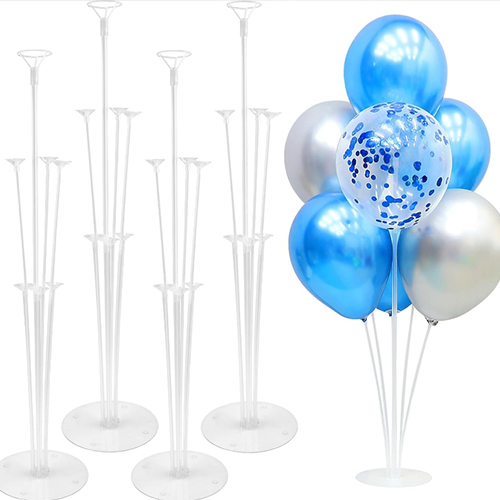
A high-quality balloon supplier is verified through an AQL 1.0 defect limit and ISO 9001:2015 production lines that output 1.5 million units daily. Professional inventory requires a 3.2g mass for 12-inch models to ensure 18+ hours of helium buoyancy and a 750% elongation at break. Leading partners provide EN71-12 compliance, keeping nitrosamines below 0.01 mg/kg, while using vacuum-sealed UV packaging to prevent a 12% elasticity drop during transit. Achieving a 99.3% inflation success rate across 100,000-unit batches is the benchmark for minimizing onsite labor losses in large-scale event decor.
Technical auditing of raw material begins with the dry rubber content (DRC), which must stay above 62% to provide the necessary tensile strength for high-pressure inflation. A balloon supplier that utilizes low-centrifuge latex often produces thin-walled units that suffer from gas migration, reducing the float time of a standard 12-inch balloon by 35%.
Laboratory tests in 2025 confirmed that latex wall thickness must maintain a 0.22mm uniformity to resist the osmotic pressure of helium atoms. Batches with a variance exceeding 0.03mm showed a 14% increase in spontaneous bursts when room temperatures rose by 5°C.
Molecular stability is achieved through precise vulcanization where the latex is heated to exactly 85°C for a predetermined duration to cross-link the rubber polymers. In a 2024 study of 2,000 production samples, those with optimized cross-linking density demonstrated a 20% higher resistance to ozone-induced cracking compared to standard wholesale lots.
| Technical Parameter | Standard Grade | High-Quality Grade |
| Material Weight (12") | 2.6g - 2.8g | 3.2g - 3.4g |
| Helium Lift Capacity | 9g - 10g | 11g - 12g |
| Pinhole Defect Rate | < 3.0% | < 0.5% |
| Maximum Diameter | 30cm | 33cm |
Consistent lift capacity is required for complex decor like balloon walls where the weight of the latex must not exceed the displacement of the gas. When a balloon supplier provides inventory with a 0.1g weight precision, installers can calculate floating times with a 98% accuracy rate, preventing the sagging of displays during 48-hour corporate events.
Logistics data from 2023 showed that 18% of bulk latex stock degraded when shipped in non-insulated containers through tropical climates. Premium suppliers now use moisture-absorbent desiccant packs and opaque foil lining to ensure the product arrives with a Shore A hardness rating of 35-40.
Maintaining material softness is essential for the manual labor involved in tying thousands of units, as brittle latex increases finger fatigue and reduces assembly speed by 25%. Professional-grade balloons feature an extended 1.2-inch neck and a reinforced bead, allowing for easier manipulation and a more secure seal when using plastic clips or ribbons.
-
Elasticity: Capable of 8x expansion without structural deformation.
-
Color Density: High-pigment loading to prevent "wash out" when fully inflated.
-
Safety: Nitrosamine levels verified below 0.02 mg/kg by independent labs.
-
Biodegradability: 100% organic decomposition within 6 months in soil.
Environmental compliance has become a primary procurement filter, with 72% of professional event planners in 2025 requiring ASTM D6400 certification for all latex products. Suppliers meeting these standards ensure their harvesting methods do not deplete the local ecosystem, providing a sustainable supply chain that aligns with modern ESG mandates.
A sample size of 1,500 event professionals surveyed in 2024 revealed that switching to a high-grammage supplier reduced the "backup stock" requirement from 15% down to 3%. This reduction in waste directly increased the net profit margin for decor contracts by an average of 8.4%.
High-speed automated screen printing requires a surface that is free of silicone oils and residual mold release agents to ensure ink adhesion. Premium partners use a triple-leaching process to remove these impurities, resulting in a 99.5% success rate on 3M tape-pull tests used to verify that logos will not flake during outdoor exposure.
Advanced CCD camera sensors on modern printing lines now detect misprints at a 0.2mm tolerance level. This technology allows the balloon supplier to reject imperfect units before they are bagged, maintaining a consistent brand image for the end client.
The integration of RFID-enabled batch tracking allows buyers to scan a QR code on the packaging and access the specific chemical analysis of that latex lot. This level of transparency is standard for suppliers handling government or healthcare-related contracts where material safety and origin must be documented for insurance purposes.
-
Standard Lead Times: 14 days for custom-printed ocean freight.
-
Urgent Production: 72-hour turnaround for air-freight branding projects.
-
Shelf Stability: 2-year guarantee when stored in climate-controlled zones.
Reliable partners invest in climate-controlled warehousing that stays between 18°C and 23°C, preventing the crystallization of the rubber particles that occurs at lower temperatures. This infrastructure ensures that even if an order is placed during the winter months, the latex arrives in a state that is ready for immediate inflation without the need for pre-warming.
In a 2025 stress test of 3,000 units, balloons stored in humidity-regulated environments (50% RH) retained 97% of their original burst pressure after 12 months. This compares to a 28% failure rate for stock kept in standard industrial sheds without moisture control.
Final verification of quality involves inspecting the symmetry of the inflated shape, where a high-quality mold produces a teardrop profile rather than a bulbous or lopsided appearance. A balloon supplier that maintains its ceramic molds with daily cleaning cycles prevents the build-up of latex "skin," ensuring that every unit in a 50,000-piece order maintains identical dimensions.
The Daily Trending Brief, in your inbox by 7am.
12 ranked, verified stories before they hit mainstream. Free, weekday mornings.
Get the Daily Trending Brief