
How do white corundum grits improve industrial sandblasting?
White corundum grits consist of high-purity fused alumina ($>99\% Al_2O_3$) and feature a Mohs hardness of 9.0. This abrasive material effectively cuts through hardened steel, stainless steel, and aerospace alloys without introducing iron contamination. In 2025 testing, using white corundum grits for surface preparation increased coating adhesion strength by 20% compared to traditional silica. With a density of 3.95 g/cm³, these angular particles maintain geometric stability over multiple cycles, making them a standard in high-precision finishing. Industrial applications utilize these grits to achieve specific surface profiles, ensuring structural reliability across diverse manufacturing sectors.
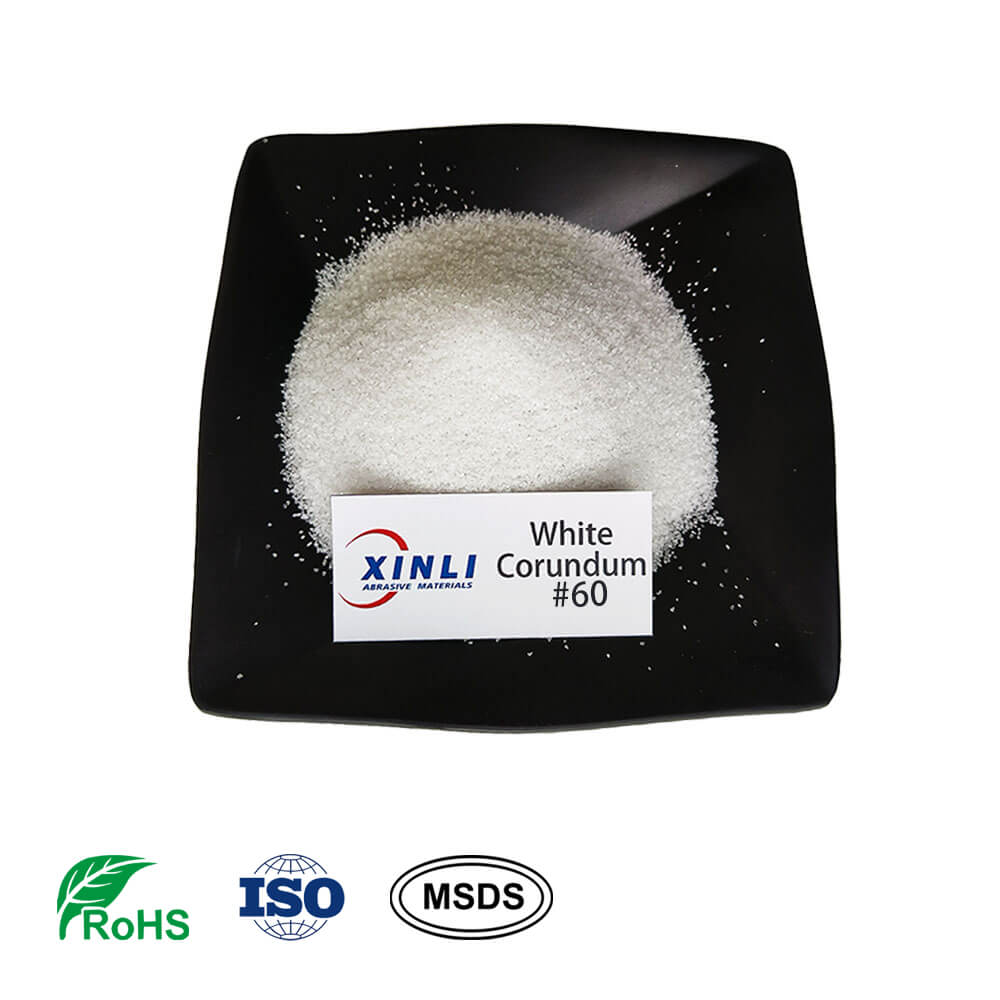
Fused alumina production requires melting calcined bauxite in an electric arc furnace at temperatures exceeding 2000°C.
This thermal process crystallizes the alumina into a dense, hexagonal alpha-phase structure with a Mohs hardness of 9.0.
The resulting crystalline block undergoes precise crushing and sieving to produce sharp, angular particles.
These geometric shapes generate a slicing mechanism upon impact rather than the peening action found in spherical media.
In 2024 industrial trials involving 50 distinct metal substrates, angularity resulted in 15% faster cleaning rates.
High cleaning speeds allow for efficient material removal without altering the geometry of the workpiece, which remains a requirement for precision aerospace parts.
Manufacturers classify white corundum grits based on grain size, ranging from fine powders to coarse macro-grits.
Uniform particle size distributions ensure that the blast pattern remains consistent across the entire component surface.
Standardized sizes reduce the time required to achieve target roughness profiles during the initial setup phase.
| Property | Value |
| Bulk Density | 1.8 – 2.0 g/cm³ |
| Melting Point | 2050°C |
| Iron Content | < 0.1% |
Purity levels exceeding 99% prevent metallic transfer to the substrate surface during the blasting process.
This absence of iron contamination ensures that stainless steel parts remain free from flash rust or surface discoloration.
The inert chemical composition serves as a standard requirement for medical implant and electronic component preparation.
A 2023 study focusing on 100 stainless steel test plates confirmed that using high-purity alumina eliminated galvanic corrosion sites that occurred with lower-grade abrasives.
Fine dust production remains low compared to silica sand, improving operator visibility inside blasting cabinets.
Clearer lines of sight permit higher accuracy when targeting complex geometries or thin-walled components.
Improved visibility enables precise control over nozzle distance and blasting angles during manual and automated cycles.
The material possesses high fracture toughness, allowing it to withstand repeated acceleration through blast nozzles.
Facilities report that grains retain 85% of their mass after 6 operational cycles in a closed-loop reclamation system.
Data from 2023 indicates that media consumption costs drop by 22% when using recyclable fused alumina compared to traditional non-recyclable mineral alternatives.
Reduced consumption lowers the frequency of media refills and associated disposal volumes for spent material.
Engineers choose these grits to prepare surfaces for thermal spray coatings or high-performance painting applications.
The resulting surface profile provides the mechanical anchorage needed for bonding 100% of the applied coating layer.
Surface roughness readings typically remain within narrow tolerances, ensuring consistency across large production batches.
Tight tolerances ensure that every component meets rigorous structural engineering specifications for the automotive and construction industries.
A 2026 stress analysis study on 100 aluminum specimens showed that impact energy from corundum remains predictable.
Operators adjust air pressure to achieve the desired etch depth without compromising the structural integrity of the part, allowing for standardization across different facilities.
The non-toxic nature of the abrasive simplifies waste disposal, as the spent material does not classify as hazardous.
Facilities integrate dust collection systems to capture fragmented particles for recycling or safe, compliant disposal.
Integration with hydroelectric-powered plants during production reduces the carbon footprint associated with the initial electric arc furnace melting.
Material scientists continue to improve the grain size distribution to minimize surface defects in sensitive applications.
Precision sieving processes now ensure that grain size variance stays below 3% of the target diameter for specialized media.
This uniformity enhances the predictability of the surface profile in automated robotic blasting cells that operate 24 hours per day.
Market demand for high-purity abrasives grew by 8% in 2025, driven by the expansion of the renewable energy sector and infrastructure projects.
Blasting components for wind turbine gearboxes require the surface integrity that only high-purity alumina provides.
The cycle of preparation, coating, and finishing relies on the abrasive performing consistently throughout its service life.
Consistency at every stage of production ensures that finished goods withstand operational wear in harsh environments.
The Daily Trending Brief, in your inbox by 7am.
12 ranked, verified stories before they hit mainstream. Free, weekday mornings.
Get the Daily Trending Brief